

Did you know lean tissue burns nearly three times more calories than fat while you rest? This surprising fact highlights why building a stronger body matters for your health. Many people focus on cardio to lose weight; however, they often overlook the vital metabolism and muscle mass relationship.
Your internal engine runs constantly. When you increase lean tissue, your resting energy burn climbs significantly. This shift helps with weight control plus improves daily energy levels for better performance.
Boosting your strength does more than tone your arms. It transforms how your body processes fuel every single minute. Every extra pound of lean tissue acts like a furnace.
This process makes achieving long-term health goals much easier for everyone. You will feel stronger plus stay leaner without extreme dieting. Understanding these basics is essential for reaching your peak physical potential.
Key Takeaways
- Lean tissue increases resting energy expenditure.
- Strength training supports long-term weight management.
- Your internal engine runs faster with more lean tissue.
- Fitness results improve when focusing on strength.
- Daily energy levels rise as you get stronger.
- Strength gains transform how your body uses fuel.
What You Need to Know About Your Body’s Energy System
Understanding your body’s energy system is crucial for optimizing your metabolic health. Your body’s energy system is a complex process that involves the conversion of food into energy, which is then utilized to perform various bodily functions, from basic cellular activities to physical movements.
The efficiency of this energy system is largely determined by your metabolic rate, which is the rate at which your body burns calories to sustain life. A higher metabolic rate means your body is more efficient at burning calories, which can impact your overall weight and energy levels.
Understanding Your Metabolic Rate
Your metabolic rate is influenced by several factors, including genetics, age, sex, and body composition. Muscle tissue plays a significant role in determining your metabolic rate because it requires more energy to maintain than fat tissue.
This means that individuals with a higher proportion of muscle mass tend to have a higher metabolic rate, as their bodies need to burn more calories to maintain muscle tissue.
How Muscle Tissue Acts as Your Calorie-Burning Engine
Muscle tissue is metabolically active, meaning it burns calories even when you’re at rest. This is why building muscle through strength training can be an effective way to boost your resting metabolic rate and enhance your body’s ability to burn calories.
Furthermore, the more muscle mass you have, the more calories your body will burn at rest, making it easier to maintain weight loss over time.
The Metabolism and Muscle Mass Relationship Explained
Delving into the metabolism and muscle mass relationship reveals the importance of maintaining a healthy balance between the two. This balance is crucial for overall health and metabolic efficiency.
How Muscle Burns Calories Even When You’re Resting
Muscle tissue is a significant determinant of your resting metabolic rate (RMR). Unlike fat tissue, muscle is metabolically active, meaning it burns calories even when you’re at rest. This characteristic makes muscle mass a critical factor in your overall metabolism.
A study published in the Journal of Applied Physiology found that for every pound of muscle gained, your body burns an additional 6-10 calories per day at rest. While this may seem minimal, it translates into a significant difference over time.
The Science of Muscle Metabolism
The metabolic activity of muscle tissue is due to its role in movement and maintaining posture. Even at rest, muscles require energy to maintain tone and be ready for action. This energy expenditure contributes to your overall metabolic rate.
“Muscle tissue has a high metabolic demand, which is a key factor in determining an individual’s resting metabolic rate.”
The science behind muscle metabolism involves complex biochemical pathways. However, the key takeaway is that muscle tissue is highly active and burns calories continuously.
Body Composition Versus Scale Weight
Focusing solely on scale weight can be misleading. Body composition, which includes the ratio of muscle to fat, is a more accurate indicator of health and metabolic health.
| Body Composition Metric | Importance | Impact on Metabolism |
|---|---|---|
| Muscle Mass Percentage | Indicates strength and metabolic health | Higher muscle mass percentage correlates with higher metabolic rate |
| Body Fat Percentage | Reflects health risks associated with excess fat | Lower body fat percentage is generally associated with better metabolic health |
Understanding and improving body composition can lead to a more efficient metabolism and better overall health.
Why Building Muscle Is Your Secret Weapon for a Faster Metabolism
Muscle building isn’t just about looking great; it’s a powerful tool for enhancing your metabolic health and increasing your energy expenditure. By incorporating strength training into your fitness routine, you can experience a significant boost in your metabolic rate, which can have a lasting impact on your overall health and wellbeing.
Boosting Your Resting Metabolic Rate Naturally
One of the most significant benefits of building muscle is its effect on your resting metabolic rate (RMR). Your RMR is the number of calories your body burns at rest, and having more muscle mass can increase this number. This means that even when you’re not actively exercising, your body is burning more calories, helping you to lose weight and maintain weight loss over time.
The Long-Term Benefits for Weight Management
Building muscle through strength training offers numerous long-term benefits for weight management. Not only does it increase your RMR, but it also helps to improve your body composition by reducing fat mass. This can lead to a more sustainable weight loss, as you’re less likely to regain weight when you have a higher proportion of muscle to fat.
| Benefits | Description |
|---|---|
| Increased RMR | Burn more calories at rest |
| Improved Body Composition | Reduce fat mass, increase muscle mass |
| Sustainable Weight Loss | Less likely to regain weight |
Improving Metabolic Efficiency Through Strength
Strength training not only builds muscle but also improves metabolic efficiency. This means that your body becomes better at utilizing nutrients and energy, leading to enhanced overall metabolic health. By focusing on strength training, you can improve your insulin sensitivity, reduce inflammation, and boost your energy levels.
To achieve these benefits, it’s essential to focus on a well-structured strength training program that targets all major muscle groups. Consistency and progressive overload are key to continued muscle growth and metabolic improvements.
How to Assess Your Current Metabolic State
Knowing your metabolic state is the foundation upon which a successful fitness plan is built. It’s essential to understand where you are starting from to create a tailored approach that suits your needs.
Assessing your metabolic state involves several key steps. It begins with understanding your body’s current composition and how it affects your overall metabolic health.
Measuring Your Body Composition
Measuring your body composition is a critical step in assessing your metabolic state. This involves determining the percentage of body fat compared to lean body mass. Accurate measurements can be obtained through various methods, including dual-energy X-ray absorptiometry (DXA), hydrostatic weighing, and skinfold measurements.
A simpler and more accessible method is using a body fat caliper. While not as precise as other methods, it provides a good estimate of body fat percentage.
| Method | Accuracy | Accessibility |
|---|---|---|
| DXA | High | Moderate |
| Hydrostatic Weighing | High | Low |
| Skinfold Measurements | Moderate | High |
Calculating Your Baseline Metabolic Rate
Your baseline metabolic rate (BMR) is the number of calories your body needs to function at rest. Calculating your BMR is vital for understanding your daily caloric needs and planning your diet accordingly.
There are several formulas to calculate BMR, with the Mifflin-St Jeor equation being one of the most accurate. It takes into account your sex, age, weight, and height.
Setting Achievable Muscle Building Goals
Setting realistic muscle building goals is crucial for maintaining motivation and tracking progress. Your goals should be specific, measurable, achievable, relevant, and time-bound (SMART).
For example, aiming to increase your lean body mass by 5 kg in the next 6 months is a SMART goal. It gives you a clear target and timeframe to work towards.

Your Step-by-Step Plan to Build Muscle and Rev Up Your Metabolism
Revving up your metabolism and building muscle requires a comprehensive strategy that incorporates strength training, progressive overload, and recovery techniques. By following a structured plan, you can achieve significant gains in both muscle mass and metabolic rate.
Step 1: Master the Strength Training Basics
To begin your journey, it’s crucial to understand the fundamentals of strength training. This involves selecting the right exercises and determining your ideal training frequency.
Select Compound Exercises for Maximum Impact
Compound exercises such as squats, deadlifts, and bench presses are essential for building muscle. These exercises work multiple muscle groups simultaneously, making them highly effective for overall muscle growth.
Examples of compound exercises include:
- Squats
- Deadlifts
- Bench Press
- Pull-ups
- Rows
Determine Your Ideal Training Frequency
Finding the right balance in your training frequency is vital. Training too frequently can lead to overtraining, while too little training may not stimulate enough muscle growth.
| Training Frequency | Muscle Groups Trained | Rest Days |
|---|---|---|
| 3 times per week | Full Body | 4-5 days |
| 4 times per week | Split Routine | 3 days |
| 5 times per week | Advanced Split | 2 days |
Step 2: Increase Your Training Intensity Gradually
Progressive overload is key to continuous muscle growth. This involves gradually increasing the weight or resistance you’re lifting over time.
Apply Progressive Overload Principles
To apply progressive overload, you need to challenge your muscles progressively. This can be achieved by increasing the weight, reps, or sets over time.
For example, if you’re doing 3 sets of 8 reps of bench press with 100 lbs, try increasing it to 3 sets of 8 reps with 105 lbs the following week.
Track Your Progress Consistently
Keeping a workout log is essential for tracking your progress. This helps you identify areas where you need to improve and make necessary adjustments.
Step 3: Prioritize Recovery for Muscle Growth
Recovery is just as important as training when it comes to muscle growth. Adequate rest and nutrition are crucial for muscle repair and growth.
Schedule Strategic Rest Days
Rest days are not a sign of laziness; they’re an essential part of the muscle-building process. Ensure you’re giving your muscles enough time to recover.
Optimize Sleep for Metabolic Health
Sleep plays a critical role in metabolic health and muscle recovery. Aim for 7-9 hours of quality sleep per night.
Step 4: Stay Consistent for Long-Term Results
Consistency is key to achieving long-term results. Stick to your training and nutrition plan, and you’ll see significant improvements over time.
Tips for staying consistent:
- Set realistic goals
- Create a workout schedule
- Track your progress
- Seek support from a workout buddy or trainer
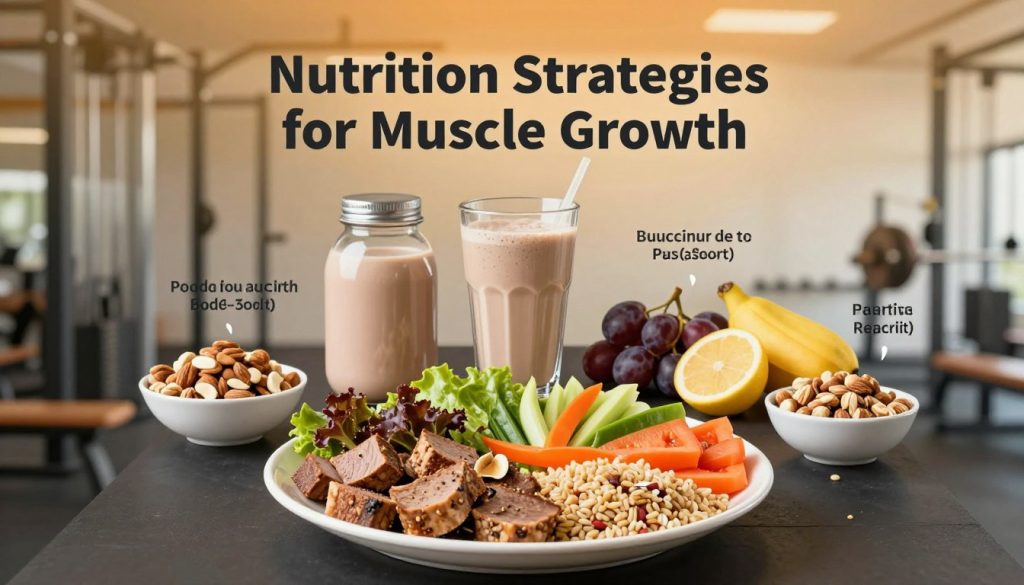
Nutrition Strategies to Maximize Muscle Growth and Metabolic Rate
Nutrition plays a pivotal role in muscle building and metabolic health, making it a critical component of your fitness journey. A well-structured nutrition plan supports your muscle growth goals and enhances your metabolic efficiency.
Meeting Your Protein Requirements
Protein is a fundamental nutrient for muscle building. It provides the necessary building blocks for muscle repair and growth.
Daily Protein Targets for Muscle Building
The daily protein intake recommended for muscle building varies based on factors such as body weight and activity level. Generally, aiming for 1.6 to 2.2 grams of protein per kilogram of body weight is considered optimal for muscle growth.
Best Protein Sources for Muscle Metabolism
High-quality protein sources include lean meats, fish, eggs, dairy products, and plant-based options like legumes and tofu. Incorporating a variety of these sources into your diet ensures you get all essential amino acids.
| Protein Source | Protein Content per Serving | Example Serving Size |
|---|---|---|
| Chicken Breast | 31 grams | 3 oz serving |
| Salmon | 20 grams | 3 oz serving |
| Eggs | 6 grams | 1 large egg |
| Greek Yogurt | 20 grams | 1 cup |
Timing Your Nutrition for Optimal Results
Timing your meals around your workouts can significantly impact your muscle growth and recovery. Consuming a balanced meal with protein and carbohydrates before and after your workout supports muscle function and recovery.
Balancing Caloric Intake with Your Goals
To build muscle, you need to be in a calorie surplus, meaning you consume more calories than you burn. However, the surplus should be moderate to avoid excessive fat gain.
Supporting Metabolic Efficiency Through Hydration
Adequate hydration is crucial for metabolic efficiency and overall health. Drinking enough water throughout the day supports your body’s metabolic processes and aids in recovery.
Avoid These Common Mistakes That Slow Your Metabolism
When it comes to boosting your metabolism, it’s not just about what you do, but also what you avoid. Many individuals unintentionally hinder their metabolic progress by falling into common traps. By being aware of these mistakes, you can take steps to prevent them and keep your metabolism on track.
Doing Too Much Cardio Without Strength Training
Focusing solely on cardio exercises while neglecting strength training can have a negative impact on your metabolism. Cardio is excellent for burning calories during the activity, but it doesn’t build muscle mass, which is crucial for a higher resting metabolic rate. Incorporating strength training into your routine helps build muscle, which in turn, burns more calories at rest.
- Cardio exercises are great for heart health and burning calories.
- Strength training builds muscle, which boosts resting metabolic rate.
- A balanced routine that includes both cardio and strength training is ideal.
Eating Too Little and Triggering Metabolic Adaptation
Eating too few calories can slow down your metabolism as your body goes into “starvation mode.” This metabolic adaptation makes it harder to lose weight and maintain weight loss over time. It’s essential to fuel your body adequately to support your metabolic needs.
Nutritional balance is key to maintaining a healthy metabolism. Ensuring you consume enough protein, healthy fats, and complex carbohydrates is vital.
Skipping Workouts and Losing Consistency
Consistency is crucial when it comes to fitness and metabolic health. Skipping workouts can disrupt your progress and slow down your metabolism. Regular exercise, especially strength training, helps maintain muscle mass and metabolic rate.
- Schedule your workouts to maintain consistency.
- Find an exercise routine you enjoy to make it a habit.
- Track your progress to stay motivated.
Neglecting Recovery and Quality Sleep
Adequate recovery and quality sleep are often overlooked but are essential for metabolic health. Insufficient sleep can disrupt hormones that regulate hunger and fullness, leading to poor food choices and overeating. Prioritizing rest and recovery supports muscle growth and metabolic efficiency.
- Aim for 7-9 hours of sleep per night.
- Allow time for rest and recovery between workouts.
- Practice good sleep hygiene to improve sleep quality.
Conclusion
Understanding the metabolism and muscle mass relationship is crucial for achieving your fitness goals. By building muscle through strength training and proper nutrition, you can significantly boost your metabolic rate, leading to improved overall health and a leaner physique.
As you’ve learned, muscle building plays a vital role in enhancing your resting metabolic rate, allowing your body to burn more calories even when at rest. Consistency and patience are key; sticking to your muscle building plan will yield long-term results.
To maximize your progress, focus on balancing your caloric intake with your muscle building goals, prioritize recovery, and stay hydrated to support metabolic efficiency. By avoiding common mistakes such as excessive cardio without strength training and neglecting recovery, you’ll be well on your way to unlocking your full fitness potential.